The Power of Propaganda: How History Reminds Us to Never Forget the Truth

By: Jason Gerber

Propaganda has often been a tool of manipulation with devastating consequences. In Nazi Germany, carefully crafted messages fueled some of history’s darkest chapters. “Unsung Hero: Revealing the Truth of Propaganda and Mixed Messages,” by Vickie Boyle and co-authored by Carolynn Boyle, explores how the Nazi propaganda machine operated and its lasting influence as a warning for future generations.

Together with her granddaughter, Carolynn, Vickie shares personal accounts, memories, and war relics to illustrate how propaganda shaped individual minds and the course of history.

The Nazi Propaganda Machine

Central to the book is an exploration of Dr. Joseph Goebbels, the mastermind behind Nazi propaganda. Through powerful speeches, media campaigns, and the strategic use of radio and film, Goebbels spread Hitler’s ideology and promoted the “Super Race” concept, justifying the oppression and extermination of millions.

The authors show how propaganda was not just a tool for control but a weapon of war that shaped society’s values and identity. Drawing from firsthand accounts, letters, and memoirs, Boyle brings these historical events to life in a deeply personal way.

The Role of Personal Narratives

The book goes beyond an academic study of propaganda by incorporating personal stories from those who lived through WWII. Veterans like Sergeant Hawley Boyle and Captain Mary K. Reid share firsthand accounts of the war’s brutality and the impact of Nazi propaganda. These stories not only highlight the human cost of ideological manipulation but also deepen our understanding of how Goebbels’ propaganda shaped both the atrocities of the regime and the soldiers who witnessed them. Vickie Boyle’s personal connections to these veterans add emotional depth to the narrative, making the book a powerful reflection on war and propaganda’s enduring effects.

Parallels to Modern-Day Propaganda

One of the strongest aspects of Vickie Boyle’s book is its comparison between Nazi propaganda and contemporary forms of manipulation. While focusing on WWII and the Holocaust, Boyle stresses the importance of recognizing the dangers of propaganda today.

In an era of social media and misinformation, modern propagandists use similar tactics to influence public opinion; the authors urge readers to critically evaluate the media they consume, question who is behind the messages, and remain vigilant to prevent history from repeating itself.

The Impact of Hitler’s Oratory Skills

A key element of Unsung Hero Reveals the Truth of Propaganda and Mixed Messages is its analysis of Adolf Hitler’s oratory skills. Known for rallying the masses with emotionally charged speeches, Hitler’s success was largely due to his ability to manipulate through rhetoric.

Dr. Goebbels, as the chief architect of Nazi propaganda, recognized the power of speech to influence and control. Boyle examines how Hitler’s charisma and carefully crafted messages, including repetition and emotional appeals, were used to convince the German people of the “Super Race” ideology and justify the regime’s atrocities.

The Importance of Remembering the Past

The primary message of Vickie Boyle’s book is clear: we must never forget the lessons of the past. The atrocities of the Holocaust and the rise of Nazi propaganda should serve as a constant reminder of the dangers of unchecked power and the manipulation of truth.

The book underscores the need for historical awareness and the role it plays in preventing future atrocities. It is essential that we educate future generations not only about the facts of history but also about the dangers of propaganda and how to resist it.

By drawing on the personal stories of soldiers who fought in the war and examining the insidious nature of Nazi propaganda, the authors offer a powerful call to action. We are reminded that historical awareness is not just about remembering the past—it is about ensuring that such tragedies never happen again.

Conclusion

Unsung Hero Reveals the Truth of Propaganda and Mixed Messages” is an essential read for anyone seeking to understand the devastating power of propaganda and its role in shaping history.

Through a combination of personal accounts, historical analysis, and a deep dive into the manipulative tactics of the Nazi regime, this book provides both a sobering look at the past and a warning for the present.

Furthermore, the book emphasizes the importance of learning from history to prevent repeating past mistakes. For those interested in the dangers of propaganda and its role in shaping history, Unsung Hero Reveals the Truth of Propaganda and Mixed Messages is a must-read.

With its mix of personal stories and historical insight, it offers a deeper understanding of how the past shapes the present and the need for vigilance against misinformation. The book can easily be assessed through major online bookstores, including Amazon and B&N  using the links below:

Amazon: https://a.co/d/0b3vks5

B&N: https://shorturl.at/IMtJI


Published by Mark V.
The Unexpected Author: Horace Mitchell’s Journey from Golf Coach to Writer

By: Joshua Finley

In the world of golf instruction, where technical manuals and swing guides dominate bookshelves, Horace L. Mitchell’s story stands out not just for his revolutionary approach to the mental game, but for the unexpected path that led him to become an author. “Never knew I could write, truly a ‘Blessing,'” Mitchell reflects, his words carrying the weight of genuine surprise and gratitude that characterizes his entire journey in golf literature.

Mitchell’s transition from golf instructor to author wasn’t the result of a lifelong writing ambition or a carefully planned career move. Instead, it emerged organically from his unique approach to golf instruction, which began when he first picked up a club in 1974 at the age of 28. This relatively late start in golf would prove to be a hidden advantage, giving him a fresh perspective that would eventually fill the pages of his groundbreaking book, “The Mental Guide for the Average Golfer.”

The decision to write a book focused exclusively on the mental aspect of golf came from Mitchell’s years of observation and hands-on experience. “The book is strictly dealing with the ‘Mental’ aspect of golf/life,” Mitchell emphasizes, highlighting how he recognized a crucial gap in golf literature. While countless books detailed perfect swings and proper stances, few adequately addressed the mental barriers that often hold players back from reaching their full potential.

What makes Mitchell’s writing journey particularly compelling is how it evolved from his three-discipline approach to golf: Attitude, Aptitude, and Execution. These core principles, developed through years of coaching and producing five professional golfers and 25 scholarship recipients, became the foundation of his writing. Unlike many golf authors who focus on technical aspects, Mitchell chose to dive deep into the psychological elements that he found were often the real differentiators between average and exceptional players.

The writing process itself was a revelation for Mitchell. As someone who had spent decades teaching through demonstration and verbal instruction, translating his mental game insights into written form presented new challenges. Yet, this challenge became an opportunity to refine and crystallize his teaching philosophy. Each chapter of “The Mental Guide for the Average Golfer” emerged from real experiences with students, making the book not just a manual, but a compilation of proven strategies and transformational moments.

Perhaps what makes Mitchell’s writing most impactful is its authenticity. His book doesn’t read like a traditional golf instruction manual because it wasn’t written by a traditional golf instructor. Instead, it carries the voice of someone who discovered golf as an adult, understood the mental hurdles firsthand, and developed a systematic approach to overcoming them. This perspective resonates particularly well with average golfers who struggle more with their mental game than their physical technique.

Mitchell’s writing style reflects his teaching philosophy: clear, practical, and focused on results. He doesn’t burden readers with complex psychological theories or technical jargon. Instead, he shares insights and strategies that readers can immediately apply to their game. His emphasis on the mental aspect of golf extends beyond the course, showing readers how these principles can enhance other areas of their lives as well.

The success of “The Mental Guide for the Average Golfer” has opened new doors for Mitchell’s teaching career. His written words now reach golfers far beyond those he can personally coach, spreading his message about the importance of mental preparation in golf performance. Speaking engagements and golf conferences frequently feature Mitchell discussing not just his teaching methods, but also how writing has enhanced his ability to communicate these crucial mental game concepts.

Looking ahead, Mitchell continues to develop his ideas through writing. His current focus is on integrating his three disciplines more deeply into golf instruction curricula nationwide. “Really, I would love to work the three disciplines into the instruction process and curriculum,” he shares, highlighting how his journey as an author has evolved into a mission to transform golf instruction at a systematic level.

The impact of Mitchell’s unexpected writing career extends beyond individual book sales. His work has helped legitimize the importance of mental game training in golf instruction, inspiring other coaches to pay more attention to this crucial aspect of the sport. Through his writing, Mitchell has created a legacy that will influence golf instruction long after he steps away from active teaching.

Available on Amazon, “The Mental Guide for the Average Golfer” continues to transform players’ approaches to the game, proving that sometimes the most valuable insights come from those who never expected to share them through writing. Mitchell’s journey from golf coach to author serves as an inspiration for others who might have important messages to share but haven’t yet found their voice.

As Mitchell continues to influence the golf world through both his teaching and writing, his story reminds us that new talents and opportunities can emerge at any point in life. His unexpected journey into authorship proves that when expertise meets authentic expression, the result can transform not just individual players, but an entire approach to the sport.


Published by Liana P. 

Pedestrian Accidents: A Guide to Examining Potential Driver Negligence

Pedestrian accidents involving vehicles can lead to severe injuries, leaving victims overwhelmed with physical, emotional, and financial challenges. Establishing the driver’s possible negligence is an important step in building a strong case for compensation. This article will guide you through how to gather evidence, navigate legal complexities, and build a convincing argument to support your claim.

Negligence in Pedestrian Accidents

To prove negligence, you need to demonstrate that the driver’s actions (or lack of actions) may have directly contributed to harming the pedestrian. This can include driving while distracted, failing to stop, or not paying attention to traffic signs. If you’ve been injured in such an incident, working with an experienced attorney can help improve your chances of success. A qualified hit and run lawyer can assist in gathering key evidence in Massachusetts, such as eyewitness testimonies and police reports.

Key Elements to Prove Negligence

  1. Duty of care: The driver had a responsibility to act in a manner that aims to ensure the safety of pedestrians.
  2. Breach of duty: The driver may have violated this duty by acting in a careless or reckless way.
  3. Causation: The driver’s actions must have directly caused the pedestrian’s injuries.
  4. Damages: The pedestrian needs to demonstrate measurable losses such as medical bills, lost wages, or pain and suffering.

Collecting Essential Evidence

The success of a pedestrian injury case hinges on the quality and quantity of evidence you collect. Evidence not only helps support claims of driver negligence but also strengthens the link between the accident and your injuries.

Photographs and Videos

Visual evidence can be especially compelling. If you can, take pictures of the accident scene as soon as possible after it happens. Focus on capturing:

  • The positions of the vehicle and pedestrian.
  • Skid marks or lack thereof.
  • Traffic signs, crosswalks, and traffic lights.
  • Visible injuries sustained by the pedestrian.

In some cases, nearby surveillance cameras or dash cams might provide additional, impartial footage.

Police Reports

Immediately reporting the accident to the police is highly advisable. The police will document the accident, interview witnesses, and may cite the driver for traffic violations. A police report provides an official account of the accident and is a vital piece of evidence in any pedestrian injury claim.

Eyewitness Statements

Witness testimony can be very helpful to your case, especially if the witnesses are neutral parties. Collect the names and contact information of anyone who saw the accident. Witnesses can help confirm:

  • The speed of the vehicle.
  • Whether the driver was paying attention.
  • The pedestrian’s behavior before the accident.

Medical Records

Your medical records are critical for demonstrating the extent of your injuries. Seek medical attention immediately after the accident, even if your injuries seem minor at first. Medical documentation provides:

  • Evidence of injuries sustained in the accident.
  • A timeline linking the accident to the injuries.
  • Proof of ongoing treatment and recovery.

Expert Testimony

In some cases, expert witnesses, such as accident reconstruction specialists or medical professionals, may help strengthen your case. These experts can offer opinions on how the accident occurred or explain how your injuries were directly caused by the driver’s actions.

Establishing Causation

Causation is a crucial element in proving negligence. The pedestrian must demonstrate that the driver’s behavior was likely the direct cause of the accident. Often, causation can be a point of contention, especially if the driver attempts to shift the blame to the pedestrian.

Comparative Negligence

In some jurisdictions, comparative negligence may apply, meaning that the pedestrian’s actions are also examined. If the pedestrian was found partially responsible (e.g., crossing against the signal or jaywalking), their compensation may be reduced. However, this does not eliminate the driver’s responsibility. Even if the pedestrian shares some fault, they might still recover damages if the driver was primarily at fault.

Pedestrian Accidents: A Guide to Examining Potential Driver Negligence

Photo: Unsplash.com

Building a Strong Legal Case

Working with an experienced personal injury attorney is critical to navigating the legal process and ensuring you present a well-prepared case. An attorney will help:

  • Investigate the accident: They will gather evidence and reconstruct the events leading up to the accident.
  • Negotiate with insurance companies: Insurance companies often try to minimize payouts, but an attorney can help you seek fair compensation for your injuries.
  • File a lawsuit if necessary: If a fair settlement cannot be reached, your attorney can take your case to court.

Comparative Negligence vs. Contributory Negligence

  • Comparative negligence: You can recover damages even if you are partially at fault, but your compensation will be reduced by your percentage of fault.
  • Contributory negligence: In some states, if the pedestrian is found even slightly at fault, they may be barred from recovering any compensation.

Final Thoughts: Compassion in the Legal Process

Pedestrian accidents can be traumatic, leaving victims in need of both medical and legal support. Proving driver negligence may feel challenging, but with the proper steps, you can build a stronger case that holds the driver accountable and helps you seek the compensation you deserve. Legal professionals can guide you through every step, helping to ease the burden during a difficult time.

Disclaimer: The content in this article is provided for general knowledge. It does not constitute legal advice, and readers should seek advice from qualified legal professionals regarding particular cases or situations.


Published by Nicholas A.

Fontaine Photography: An Award-Winning Port Coquitlam Photo Studio

Located just outside Vancouver in the heart of Port Coquitlam, Fontaine Photography Studio has become a destination for high-quality, stunning portraits. Founded by Jenn Fontaine and supported by a team of talented photographers, this award-winning studio has over a decade of experience and a proven track record of exceeding client expectations.

Whether sleek professional headshots, branding photography, boudoir portraits, or touching family photos, Fontaine Photography brings a personalized approach to every session. With a cozy yet modern studio, cutting-edge equipment, and a reputation for attention to detail, the team that every client feels like a star from start to finish.

Leading Port Coquitlam Photographers 

At Fontaine Photography, every session begins with a personalized consultation, where the team takes the time to fully understand each client’s vision and create a tailored photoshoot plan. Whether it’s an in-studio session or a stunning outdoor shoot, every detail is thoughtfully designed to aim for a seamless and enjoyable experience.

Every session includes hair and makeup services to enhance the overall experience. The studio also offers expertly retouched images and high-quality photography products, making it easy to take home beautiful keepsakes. Fontaine Photography offers a range of flexible packages designed to suit different preferences and needs, providing a personalized portrait experience.

Professional Headshots & Branding Photography That Stands Out 

Fontaine Photography: An Award-Winning Port Coquitlam Photo Studio


Photo Courtesy: Fontaine Photography Studio

In today’s digital age, where first impressions are everything, Fontaine Photography has established itself as the go-to studio for business headshots and branding photos that make an impact. Whether for updating a professional website, enhancing marketing materials, or creating content for social media, Fontaine Photography brings expert guidance and creative vision together to deliver standout headshots and branding portraits. Check out the modern professional headshots created by Fontaine Photography. 

Port Coquitlam Family Photos

Fontaine Photography: An Award-Winning Port Coquitlam Photo Studio

Photo Courtesy: Fontaine Photography Studio

Fontaine Photography Studio in Port Coquitlam is quickly gaining a reputation as the premier studio for capturing memorable family moments. Known for its ability to bring out the true personalities and emotional connections between family members, this studio takes a refreshing, relaxed approach to every session. Whether the photoshoot happens in the welcoming studio or among the stunning local scenery, the talented team at Fontaine Photography focuses on creating well-composed and carefully crafted shots. That highlights the bonds that make each family unique. Fontaine Photography is a popular option for families looking to capture meaningful memories. Discover the exceptional family photoshoots created by Fontaine Photography.

Transformative Boudoir & Glamour Photography

At Fontaine Photo Studio, boudoir & glamour photography is seen as more than just capturing beautiful images; it’s about creating an empowering and transformative experience. Led by a skilled team of female photographers, every session is designed to help clients feel confident, relaxed, and absolutely radiant. The boudoir photoshoots are personalized to reflect each client’s style, with the team capturing everything from soft shots to bold, dramatic poses. Fontaine Photography celebrates beauty in all its forms, creating gorgeous boudoir & glamour portraits that clients truly love. 

Port Coquitlam & Surrounding Area Photoshoots

Fontaine Photography Studio takes photoshoots outside the studio with on-location sessions throughout Port Coquitlam and nearby areas. Whether it’s the vibrant cityscape of Vancouver or the peaceful charm of local parks, the team customizes each shoot to fit the backdrop. Serving areas like Burnaby, Surrey, New Westminster, and beyond, Fontaine Photography helps every portrait capture the essence of the location. Explore the region’s beauty and create lasting memories with the professional team at Fontaine Photography.

Luxury Photography Products

At Fontaine Photography, creating exceptional portraits is just one part of the experience. The studio is dedicated to turning each captured moment into a timeless work of art. With a range of luxury products, including custom wall art, handcrafted albums, and elegant portfolio boxes, every piece is designed to display photographs with sophistication. These offerings provide a thoughtful way to preserve memories, turning them into lasting keepsakes.

Premier Port Coquitlam Photographers 

Fontaine Photography has become a standout name in Port Coquitlam’s photography scene, earning recognition from Vancouver’s Best Magazine, Medium Magazine, and a Bronze Portrait Masters award. With a keen eye for creativity and a commitment to excellence, the studio has established itself as a choice for high-quality photography in the region. Their reputation for delivering stunning portraits and memorable experiences has solidified Fontaine Photography as a destination for those seeking exceptional photography in Port Coquitlam.

What Clients Are Saying 

Fontaine Photography has earned a reputation in Port Coquitlam for its ability to turn everyday moments into one-of-a-kind images. Clients appreciate the team’s approach, where their ideas are transformed into stunning photos. The studio’s reviews highlight what makes Fontaine Photography stand out in the local photography community. If you’re curious about the magic behind these remarkable portraits, head to Fontaine Photography. Visit their business profile to learn more about their services and approach.

Book A Memorable Photoshoot with Port Coquitlam Photographers

At Fontaine Photography, every photoshoot is an opportunity to create something truly special. As Port Coquitlam photographers, Fontaine Photography Studio delivers a memorable experience that makes clients proud to share their photos. Ready to create portraits you love? Book a session today and let them bring your vision to life. 


Published by Liana P. 

“Iron Lady” Daria Sitnikova Creates a Platform for Fearlessness

By: Svetlana Khachiyan

Today we are talking to Daria Sitnikova, the “Iron Lady”. She got this nickname not only because of the titanium structure in her spine but also because of her incredible resilience and fortitude. Dasha showed social initiative and created a platform to unite silent people out of fear of being judged for not meeting generally accepted standards.

Hello, Dasha! Thank you for taking the time to do this interview. Please tell us why you decided to share your story.

Hello! I need to speak openly about my path. I had been hiding my problems for a long time, afraid of condemnation and misunderstanding. But at some point, I realized that openness is not a weakness but a huge strength. If my story can motivate at least one person, then all this was not in vain.

This is truly inspiring. How did your journey begin?

I was born in Stavropol to a small family. After school, I entered a medical college and became a cosmetologist. Later, I moved to Moscow, where I worked in large companies related to pharmaceuticals and cosmetology. One day, I decided to follow the example of my mother, who is a sewing technologist, and I opened my studio and achieved success. A few years later, I had a large sewing production facility. I managed a team of 300 people.

"Iron Lady" Daria Sitnikova Creates a Platform for Fearlessness

Photo Courtesy: Daria Sitnikova

This was an important stage in your life. But, as I understand, more difficult trials awaited you ahead.

Yes, the turning point was moving to the USA. It was an incredibly difficult period, and I gained 75 kilograms.

At some point, it seemed to me that I had ceased to be myself. This period stirred up some childhood fears. Fears of rejection, insecurity, apathy, isolation, and unwillingness to do anything appeared I did not want to look at myself in the mirror.

And I realized that I had to change something.

How did you cope with this?

I worked with my inner state, and treatment with the medication Mounjaro, prescribed by the doctor according to the indications, also helped me.

Raul Megrelishvili, my husband, has always supported me.

We met in Moscow, but he is originally from Tbilisi. His values have always inspired me, his attitude to life and his ability to support me in difficult times.

He always tells me everything will be fine with me, and I’m starting to believe it.

Was his support key for you?

Absolutely. He taught me to accept myself. Thanks to him, I fell in love with Georgian cuisine, and now I dream of the moment when he will open a Georgian restaurant in Los Angeles.

That sounds great. But I know you’ve been through more difficult challenges. Tell me, please, about your spinal surgery.

As a child, I had a severe curvature of the spine – it deviated by 140 degrees. At 15, I had to undergo a very complex operation on the spine with the installation of a metal structure.

Doctors warned me that I could remain disabled, but I begged them to do it because I could no longer be invisible to my classmates. Luckily, I did not face bullying, but the kids simply ignored me.

I was bedridden for six months, learning to walk again. I wore a corset. I couldn’t sit for six months. I could only move around lying down in a taxi. It was as if my whole life had started anew.

This metal structure has been with me for life. I still can’t go through magnetic frames at airports or do complex physical exercises.

It becomes clear why you are called the “Iron Lady.” How do you feel about this nickname?

I accepted it. It reminds me that even the most difficult challenges make us stronger.

You mentioned that after moving, you started working on your inner state. How did that happen?

Yes, I started practicing regression to deal with my fears and experiences. It was a long process, but I learned to accept myself and my story.

Do you want to share this experience with others now?

That’s right. I want to create a platform where people can tell their stories without fear of judgment. I suggest using Instagram and a special hashtag, #myironstory, to unite those facing body image and self-perception issues.

How do you see this community?

It will be a place of support and inspiration. I believe that sharing our difficulties frees us from the burden. We will support, share our experiences, and inspire others to be open and honest.

"Iron Lady" Daria Sitnikova Creates a Platform for Fearlessness

Photo Courtesy: Daria Sitnikova

Your story is truly inspiring. Is there anyone else who has had a big influence on you?

Of course, it’s my mom. She raised me alone, without a father, and from childhood, she did not allow me to feel disabled and said: “You are the same as everyone else. You can do anything you want.” This became my inner guide.

What advice would you give to people afraid to start their journey of change?

Stop hiding behind fears. Our shortcomings are our strength. We don’t have to be perfect. Just take the first step: talk about your difficulties. You’ll be surprised how many people are ready to support you.

Dasha, thank you for your sincerity.

Thank you! I hope my story will help someone believe in themselves and take the first step towards change.


Published by Joseph T.

Room 79 at Dawn: Reimagining Realities Through Keyi Liu’s Vision

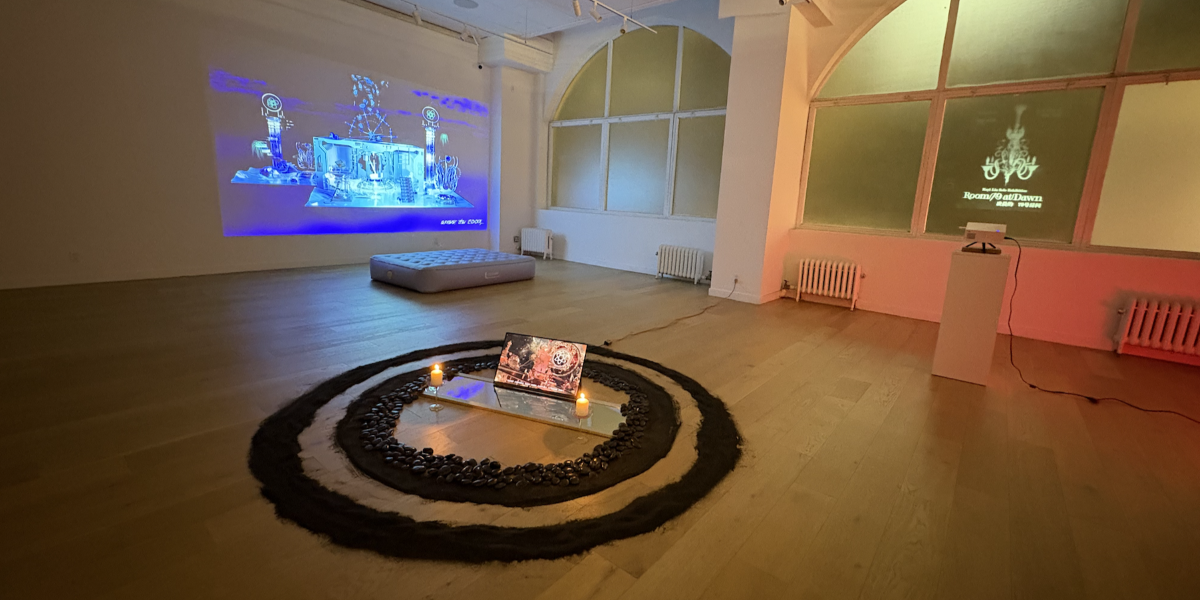
Room 79 at Dawn: The Keyi Liu Solo Exhibition was held at Manhattan Midtown from December 27th to 30th, 2024. This exhibition presents Keyi Liu, whose work exists at the intersection of speculative imagination and philosophical inquiry, where visual language becomes a tool to challenge traditional perceptions and reimagine the boundaries of reality. Through 3-dimensional space creation and illustrative narratives, the artist constructs immersive worlds that interrogate identity, freedom, and humanity’s evolving relationship with technology. Her unique approach to visual storytelling employs a rich tapestry of artistic techniques to create fantasies that challenge how we see, feel, and understand the world.

Room 79 at Dawn: Reimagining Realities Through Keyi Liu's Vision

Photo Courtesy: Keyi Liu

What sets Keyi apart is her ability to build fantasy in ways that defy traditional methods of visual construction. She forgoes conventional symmetry, harmony, and linear perspective, instead embracing a dynamic and disruptive aesthetic that aligns with the conceptual nature of her work. In this exhibition, the artist’s visual language and techniques act as a medium to explore the boundaries of form, space, and color. Through these approaches, she invites viewers to reflect on themes of existence and envision possibilities for the future, offering a fresh perspective on art and its influence on perception.

Heavenly (2024), one of the most significant 3-dimensional works in this show, has revealed how Keyi employs vibrant, otherworldly hues and exaggerated spatial dynamics to craft a dreamlike worship ritual. The proportions of objects and environments within this immersive piece defy logic, evoking a sense of the surreal and the sublime. These deliberate distortions create an unsettling yet captivating world where the viewer’s sense of scale and reality is continually disrupted. By breaking the traditional boundaries of physical forms and space, the artist redefines how audiences engage with visual media, turning seeing into an active exploration of new worldviews in the name of futurism.

Room 79 at Dawn: Reimagining Realities Through Keyi Liu's Vision

Photo Courtesy: Keyi Liu

In her illustrative series, The Last Dream (2021), Keyi adopts color as an aesthetic choice and a tool for emotional and symbolic resonance. Iridescent hues and unconventional palettes become the foundation for reimagining the natural and the mythical, creating a space where dragons rise from stained glass, mermaids await illusory rain, and rituals transcend their earthly confines. Each element in these compositions is charged with meaning, challenging viewers to confront the limitations of conventional visual logic and embrace the unpredictable beauty of imagined worlds.

Similarly to her other structured narrative, The Lost Island (2023) imagines a future city landmark on an alien planet. It uses stark contrasts between the familiar—Roman-inspired architecture, symbols of human civilization—and the alien, where forms blend fluidly with their environment. This work’s fractured and fluid visuals evoke impermanence and fragility, where humanity’s creations dissolve into the vast, unyielding cosmos.

Room 79 at Dawn: Reimagining Realities Through Keyi Liu's Vision

Photo Courtesy: Keyi Liu

Keyi’s work no doubt captures the tension between the earthly and the ethereal, the physical and the digital. Her approach challenges the audience to reimagine the act of seeing, pushing beyond passive observation into active engagement with the visual and emotional landscapes she creates. Through her work, fantasy serves as a means to explore the connection between human nature and societal norms. Room 79 at Dawn delves into themes of transcending limitations and embracing the unknown, inviting contemplation on freedom, identity, and our place in the cosmos.


Published by Joseph T.