The Sports Portal Ecosystem Offers Athletes, Sports Organizations, Parents, Coaches, and Brands Unparalleled Value


By: Maria Williams

While there is a lot of sports content on mainstream social media, most of it is drowned out by so much noise. While the jokes and memes can be entertaining, it can be very hard for users, especially athletes and their parents, to find serious sports content and information, such as sports clubs to join or coaches to train under. Because of how social media algorithms are structured, athletes may have to go through multiple platforms that have nothing to do with their sport before finding what they need, which feels like having to find a needle in a haystack.

The Sports Portal, a sports-centric social media platform, seeks to solve this issue by connecting athletes, youth sports players, parents, coaches, and other sports enthusiasts. Users can create profiles that showcase their involvement in the sport. For example, athletes’ profiles can include their physical stats, sports achievements, teams they’ve played for, increasing visibility for potential AAU teams and high school/college scouts. Coaches can highlight their coaching style, achievements, and reviews from former players or players’ parents. Both athletes and coaches can also post videos featuring their workouts and training sessions, giving other users a glimpse into their capabilities.

The Sports Portal Ecosystem Offers Athletes, Sports Organizations, Parents, Coaches, and Brands Unparalleled Value (2)

Photo Courtesy: The Sports Portal, Logo

Open to all sports, The Sports Portal has been experiencing growth of its user base, particularly in basketball, owing to the sport’s well-developed statkeeping and the outsized impact an individual’s performance has on the game. According to The Sports Portal Founder Maurice Barnett, the company is taking a grassroots approach, helping create excellent organizational profiles and working with parents to help them understand exactly the value it brings to their athletes’ development. Barnett, who is constantly gathering feedback from various sectors, shares that one program director told him that their program no longer needs to invest in a standalone website because their profile on The Sports Portal can perform all its functions. 

Barnett says that The Sports Portal has received positive feedback from players, which includes  his son, friends and basketball team. They say that the ability to give reviews for coaches, provides insight into how other players were impacted by particular coaches or organizations. This allowed them to make better informed decisions on their next opportunity. An upcoming feature will allow players to organize pickup games, a feature known as Who’s got next?, allows players and teams to issue friendly challenges. 

As for families, they tell Barnett that they appreciate being able to track their athletes progress using The Sports Portal as well as the coach reviews, increasing their chances for better player development. Meanwhile, coaches say that having a The Sports Portal profile helps them put forward their coaching profile, while highlighting what level of players they are looking for. The coach’s profile allows coaches to find more players to develop and work with, opening up potential revenue streams.

“From a user standpoint, The Sports Portal’s value lies in highlighting your achievements and your focus,” Barnett says. “It allows you to showcase your sports skills, interests, progress, and ensure that you’re standing out relative to where you are in your journey.”

Aside from athletes, parents, coaches, and sports clubs, The Sports Portal also benefits brands, especially those related to sports, including apparel, equipment, and nutrition. These brands can advertise directly to a demographic that is more likely to be relevant and interested in their business. By being on The Sports Portal’s platform, the brand’s presence is much more natural, and it allows them to build and establish organic relationships. 

“The Sports Portal is revolutionizing the way athletes, youth sports players, parents, coaches, and sports enthusiasts connect and engage.” Barnett says. “As the first sports-only social software platform, we provide a unique insight into local sports teams and organizations. We are transforming the sports experience for athletes, youth players, parents, coaches, and sports enthusiasts. We seek to go beyond being a social media platform, rather aiming to build a community where athletes shine and communities thrive. Join us today and become part of a dynamic sports community that celebrates your passion for the game.”

Published by: Holy Minoza

The Art of Giving Back: Michael Ciullo Improves Communities Through the Ciullo Foundation

By: Maria Williams

At first sight, entrepreneurship, and success reward business owners only with monetary gains, respect, renown, and boundless work opportunities. After experiencing and indulging in the surface-level advantages of wealth, Michael Ciullo, passionate and driven founder of Nsight Health, co-host of the Finding Faith podcast, and a leader of many other business ventures, embarked on a journey of giving back, sharing blessings, and improving local communities through the Ciullo Foundation. 

Michael, after turning his life around, generating millions of dollars in revenue, and founding multiple successful establishments, quickly realized the stress and anxiety that comes with successful entrepreneurship. “I felt like I was on a train going down at a hundred miles an hour, and half a mile up the road, I was laying down more rails so the train doesn’t derail,” says Michael. With the adrenaline of working over 100 hours a week pumping in his veins, Michael lost himself along the way, returning to old unethical behaviors. 

“It got to a point where I gave up and couldn’t control it anymore,” adds Michael. Overwhelmed, stressed, and with a weakened marriage on his shoulders, Michael, for the first time in years, went to church, seeking any form of solace amidst the chaos. What was supposed to be an escape from everyday struggles for Michael and Angelika, his wife, became the center of their lives. “From only attending church every Sunday, we started listening to worship music and reading Scripture every morning. Suddenly, we felt different and lighter, and our hearts have changed completely,” Michael shares.

The immense transformation that affected Michael’s work life, marriage, and every other aspect of his life inspired him to spread the kindness he’d received at the church. With a desire to contribute, he and Angelika began donating 10% of their income to a local church, volunteering, serving meals to the homeless, and working toward a more generous, amicable future. 

Recently, Michael’s business plans have expanded, and the entrepreneur is expecting many more successes to come his way. The optimistic news ignited a fierce desire to help more people and led to the creation of the Ciullo Foundation. Named after the young entrepreneur, the organization will be receiving 10% of Michael’s income, and all profits will be dedicated toward improving the surrounding communities. Whether through supporting churches, missionary trips, building homes, or assisting animal shelters, the Ciullo Foundation is bound to leave a lasting mark on the world. Currently, Michael is in the process of completing the 501(c)(3) tax exemption status, after which the foundation will be able to accept donations and external grants. Michael is expecting the official status change will happen in the next few months. 

Now, the Ciullo Foundation is self-funded and created purely out of Michael’s and Angelika’s sacred and unsated urge to give back. In the future, the altruistic pair hopes to attract more entrepreneurs and successful individuals to give back to their communities, either through the Ciullo Foundation or another organization. While both partners are involved in the creation, execution, and mission of the nonprofit, Angelika will be handling day-to-day tasks and ensuring the money received will be allocated to the most appropriate projects.

For Michael, entrepreneurship and success come with tremendous responsibilities. Fulfilling these responsibilities, either through donating, helping at local homeless centers, or simply spreading kindness, adds immense value to the multiple advantages, pleasures, and benefits of financial success. 

“If you’ve been blessed, you have a responsibility to be a blessing. I believe the quickest way for one’s soul to die is to accumulate enormous amounts of money, get greedy, and never share it,” shares Michael. “I’ve lived that life, too, and I would never go back. How much money you make will never resolve the troubles you feel from within, and if you spiral and become too materialistic, you will never feel real happiness. For me, the only solution that soothed my soul was the powerful combination of God, purposeful faith, and generosity.”

Michael Ciullo, a forward-thinking entrepreneur, driven business owner, devoted husband, believer of God, and compassionate community member, took an inspiring step toward fostering a more friendly and generous future. After witnessing the power 10% of his profits gave to a local church, he’s committed to spreading kindness further through the Ciullo Foundation and using his blessings to bless others.

Published by: Holy Minoza

Skills You’ll Develop With an Interior Design Course

The interior design industry is a popular industry for a career in helping to design beautiful and safe environments. Interior design courses can help teach you everything you need to get a job as a designer and work independently or as a group. This article lets you understand the essential skills you’ll learn and develop when you undertake an interior design course. 

Space Planning and Layout Design

An essential skill you’ll learn is the ability to create a functional space that can maximize efficiency while also being beautifully designed. Space planning and layout design involves learning how to properly arrange appliances, furnishings and other elements to suit a room’s overall purpose. Some things you’ll learn with an interior design course include:

  • Understanding spatial dimensions, circulation, and how people move through a room. By understanding how the space will be used can help determine where you can and can’t place items. 
  • Arranging furniture to maximize comfort and functionality at the same time. 
  • Creating zones within spaces (for example, living, dining, or work areas) while maintaining a cohesive look and feel.

Undertaking interior design courses, such as the American International University courses in Kuwait or other locations, can give you the skills you need to land that job you’re looking for in the interior design industry. 

Color Theory and Application

Colors have a significant impact on the way people feel when they walk into a room. When learning interior design, you’ll also learn about color theory and trends and how to apply color correctly within a space to achieve the feel and atmosphere you want from a room. An interior design course will: 

  • Help you understand the psychology behind colors and how they can affect mood, emotions and behaviors.
  • Help you master the different color combinations and allow you to experiment with other color schemes like monochromatic, analogous, and complementary. 
  • Help you create color balance for harmony within a room. 


Color theory will help you determine which colors work well in a room with a designated purpose. 

Materials and Finishes

An interior design course also teaches you the difference between the materials and their finishes when you’re looking to become an interior designer. This allows you to better understand the applications, characteristics, and environmental impacts they have on a space. Some things you may learn include: 

  • You may use different types of materials throughout your career, including metal, glass, wood, stone, textiles and synthetic materials. 
  • Choosing the suitable types of finishes for the project based on their durability and maintenance level.  
  • How to choose materials that are eco-friendly and which minimize the overall impact on the environment without sacrificing any quality in the design.


The materials and finishes you choose will determine whether the outcome looks as good as you want it to, so it’s important to learn how to use them wisely. 

Project Management

If you choose a more advanced Interior design degree, you’ll learn how to manage projects that may involve a team. This requires organizational skills, communication skills, and time management skills. Some areas you may learn include:

  • Managing budgets and working within client budgets to deliver designs that meet their needs without overspending.
  • Organizing and working with contractors, suppliers, and craftsmen to bring your design vision to life.
  • Developing realistic project schedules to ensure timely delivery of your designs.


Project management is essential if you want to run an interior design business in the long term. 

How Lighting Affects a Room 

Understanding how lighting works within a space is crucial. Whether artificial light or natural sunlight coming through a window, it’s critical to know how to balance the light in the most effective ways to enhance a room’s overall function, aesthetics and mood. You may learn:

  • The different types of lighting may include accent, ambient, or decorative lighting. 
  • How to layer lighting so it creates a balanced effect. 
  • How to incorporate the most energy-saving options while maintaining quality.

Endnote

An interior design course offers a comprehensive range of skills. These skills are essential for creating aesthetically pleasing environments and ensuring the safety, functionality, and sustainability of the spaces you design. Whether you’re pursuing a career in residential, commercial, or hospitality design, an interior design course is the starting point for success in this exciting industry.

Published by: Martin De Juan

Map-Collective Revolutionizes Environmental Sustainability Through AI-Driven Traceability and Transparency

With people becoming progressively conscious of environmental impacts, the need for robust tools to monitor and manage sustainability metrics is more urgent than ever. Enter Map-Collective, a company at the forefront of AI-driven automation for supply chain traceability, tracking greenhouse gas (GHG) emissions, and biodiversity transitions. Founded by Tara Gupta, Map-Collective stands on the dual pillars of traceability and sustainable supply chain transition, this approach could significantly influence how businesses and governments manage sourcing.

Tara Gupta’s journey to founding Map-Collective is as diverse as it is inspiring. With a background in filmmaking at Rhode Island School of Design (RISD), her interest in storytelling merged with a study of urban planning and systems design. This interdisciplinary approach led her to view the planet’s environmental crises as an opportunity to create a sandbox game view for Earth in digital space. This vision extended from the macroplanetary limits of Earth down to the organismal level. The idea crystallized into Map-Collective, officially launched on January 8, 2020. 

“The initial years of Map-Collective were dedicated to rigorous research and development, culminating in significant funding from the National Science Foundation,” shares Tara. This support helped the company develop innovative technologies, such as a comprehensive GHG emissions calculator that incorporates planetary boundaries’ tipping points.

Map-Collective’s approach to supply chain management emerged from its early work on carbon tracking. In 2021, the company delved into the carbon emissions landscape, working with various clients. These projects revealed the inadequacies and often speculative nature of existing supply chain emissions data. This realization propelled Map-Collective to enhance its methodology, leading to a more accurate and reliable system of supply chain emissions tracking by adding an AI-powered method for supply chain traceability. 

Map-Collective Revolutionizes Environmental Sustainability Through AI-Driven Traceability and Transparency

Photo Courtesy: Tara Gupta, Map-Collective

Map-Collective’s key differentiator lies in automating the tracking of Scope 3 category one flows and emissions, which are purchased goods and emissions, as defined by the GHG protocol. By leveraging an advanced AI model that taps into comprehensive data sources, including bill of lading data and satellite information, Map-Collective provides a detailed, verifiable picture of supply chain emissions, helping organizations meet stringent reporting requirements and achieve true sustainability. This AI model advances the state of current supply chain traceability by identifying and filling in major data gaps, as the bill of lading only covers about 40% of global supply chain data. Map-Collective’s intelligent model builds off of these connections to bridge the remaining 60% gap. 

Map-Collective is distinct in its use of the IOTA protocol, a distributed ledger designed for the Internet of Things (IoT). The IOTA protocol offers traceability without compromising the confidentiality of sensitive supply chain data. This approach ensures that while transparency is maintained, proprietary information remains secure, an essential feature for industries like defense contracting. 

Beyond carbon, Map-Collective integrates the planetary boundaries framework developed by the Potsdam Institute for Climate Impact Research. This holistic approach considers various environmental limits, such as freshwater use and land system change, ensuring that sustainability efforts are aligned with the planet’s ecological thresholds.

At the heart of Map-Collective’s success is a culture of continuous innovation. The team’s commitment to research and development ensures that they remain at the cutting edge of environmental systems design and data analytics. Tara envisions Map-Collective as a transformative tool for both businesses and governments, fostering a new era of resource stewardship in the Anthropocene.

Map-Collective’s mission extends beyond mere compliance; it aims to redefine how we interact with and manage the Earth’s resources. By providing unparalleled traceability and actionable insights, Map-Collective empowers organizations to make informed decisions that support sustainability and resilience. In doing so, it contributes to global efforts in combating climate change and promoting sustainable practices, setting a new standard for environmental accountability.

Published by: Martin De Juan

Shadow Six Racing Founder Sheds Light on How Typhoon and Its Unique Features are Truly Versatile

It’s time for a new class of aquatic vehicle. Versatile, easy to operate, and incredibly capable. This is the take of Ryan Goldberg, founder of Shadow Six Racing.

Traditional watercraft are not equipped to meet modern military and civilian needs, as they lack the versatility and performance required for tasks like troop deployment, reconnaissance, and coastal patrols. Jet skis, designed for recreational use, lack the ability to navigate extremely shallow waters or operate in rough surf conditions. As military strategies adapt to changing threats, and the world of watersports becomes ever more extreme, the demand for alternative watercraft continues to grow. 

There exists a pressing need for alternative watercraft that can address the evolving demands of extreme sports and rescue missions. In the world of extreme sports, athletes are constantly pushing the boundaries of what is physically possible, challenging themselves to conquer huge waves, faster speeds, and more treacherous conditions. However, watercraft like wave runners and jet skis often fall short of providing the stability, speed, and maneuverability required for these adrenaline-fueled pursuits. 

Similarly, in rescue operations, where every second counts and lives hang in the balance, the limitations of conventional watercraft can mean the difference between success and tragedy. 

Jet skis, long hailed for their maneuverability and speed, are inadequate for modern military needs. In scenarios like troop deployment, where precision and speed are crucial, conventional jet skis fall short. The need for alternatives that can handle rough surf conditions, shallow waters, and high-speed maneuvers has never been more apparent. This is where the Typhoon steps in, offering a solution that combines power, agility, and usability.

At the heart of this Aquatic Utility Vehicle’s (AUV) appeal is its usability. Unlike traditional watercraft that require extensive training to master, the Typhoon boasts intuitive controls and exceptional stability. With just a few minutes of instruction, even novice users can harness its full potential, reaching speeds of up to 90 miles per hour with ease. The vehicle’s innovative design ensures smooth handling and precise maneuverability, even in the challenging conditions.

Moreover, the AUV’s unmatched stability sets it apart from its counterparts. While wave runners and jet skis often struggle in rough waters, the Typhoon glides effortlessly, absorbing impacts and maintaining control with minimal effort. Its unique suspension design provides unparalleled stability, allowing users to navigate with confidence and without fear of capsizing or losing control. This level of stability not only enhances safety but also opens up new possibilities for extreme sports and rescue missions in treacherous conditions.

In the realm of extreme sports, the Typhoon aims to revolutionize the way we approach water-based activities. From surfing competitions to high-speed racing, its unmatched performance capabilities offer athletes unprecedented opportunities to push the boundaries of their sport. The Typhoon can get into extremely rough surf situations, allowing rescue teams to recover surfers and tow them to safety quickly, even in extreme conditions. Many surf teams have been interested in this solution, as they face similar scenarios when surfing on 100-foot waves. With its ability to navigate rough surf conditions and execute precise maneuvers at breakneck speeds, the Typhoon opens up new frontiers for thrill-seekers.

Furthermore, the Typhoon’s potential extends beyond the realm of recreation, offering a lifeline in critical rescue missions. The vehicle also has 360-degree cameras to monitor everything happening around the vehicle, making it easier to rescue individuals. Also, its ability to traverse shallow waters, navigate rocky shorelines, and operate in extreme conditions makes it an invaluable asset for coastguards and rescue teams worldwide. Whether rescuing surfers caught in massive waves or intercepting vessels in peril, the Typhoon’s versatility and power ensure swift and effective responses in any scenario.

“I’m not saying there are no risks, of course, there are risks,” says Ryan Goldberg. “But if people, like surfers, are going to chase adrenaline around the world, and service men and women are going to risk their lives out on the water, I believe they should have a vehicle that can handle the environment with ease. It also helps that the thing is incredibly fun to drive.”


Published By: Aize Perez

BasedLabs: Way to Use Flux 1

In the swiftly evolving global of gadget mastering and artificial intelligence, the want for present day tools to streamline model creation and fine-tuning has turned out to be more vital than ever. BasedLabs is rising as one of the green structures for operating with AI fashions, in particular when using Flux 1 Prompts. If you are searching for a powerful way to Train Flux LoRa, BasedLabs offers a solution.

What are Flux 1 Prompts?

Before diving into the blessings of BasedLabs, it’s vital to recognize the energy of Flux 1 Prompts. Flux 1 is an advanced framework for growing gadgets and getting to know fashions. One of its key features is the “Prompt” approach, in which the framework makes use of prompts to manual AI fashions to generate correct outputs. Flux 1 Prompts are especially beneficial for language generation tasks, along with text crowning glory, query answering, and summarization.

Flux 1’s Prompt generation lets developers create AI solutions which can interpret nuanced instructions and adapt to numerous consumer requirements. This makes it an ideal fit for everybody seeking to push the boundaries of AI-pushed responsibilities.

Why BasedLabs is a Good Platform for Flux 1 Prompts

BasedLabs: Way to Use Flux 1

Photo Courtesy: www.basedlabs.ai

BasedLabs takes the talents of Flux 1 Prompts to the next degree, offering an intuitive and powerful platform for users to work with. Here’s why BasedLabs stands out:

1. User-Friendly Interface

BasedLabs gives a smooth and clean-to-navigate interface that simplifies the process of working with Flux 1. Whether you are a seasoned developer or an amateur, BasedLabs reduces the studying curve, making it sincere to input activities, experiment with numerous configurations, and generate effects in a short timeframe.

2. Enhanced Prompt Optimization

Using Flux 1 Prompts correctly requires high-quality-tuning and customization to acquire the favored output. BasedLabs presents tools that enable customers to modify and refine prompts without difficulty, making sure that fashions generate accurate and relevant responses.

3. Scalability

One of the important features of BasedLabs is its ability to scale in keeping with the complexity of the venture. When working with Flux 1 Prompts, you could want to check more than one configuration or teach great fashions. BasedLabs lets in for scalable deployments, making it appropriate for initiatives of any size.

4. Integrated Support for Training

When it involves training AI fashions, BasedLabs helps the Train Flux LoRa procedure efficiently. LoRa (Low-Rank Adaptation) is a technique used to first-rate-music pre-trained fashions with minimal useful resource consumption. BasedLabs makes it easy to put in force LoRa, substantially lowering the computational overhead and making the education of models quicker and extra value-powerful.

How to Train Flux LoRa on BasedLabs

Training with Flux 1 Prompts on BasedLabs turns into seamless with the incorporated LoRa help. Here’s how BasedLabs complements the Train Flux LoRa technique:

1. Pre-Trained Model Integration

BasedLabs allows customers to start with pre-educated fashions, saving both time and computational resources. These pre-trained fashions can then be fine-tuned in the usage of LoRa, enabling customers to construct on the model’s existing understanding base without having to teach from scratch.

2. Customizable Training Parameters

BasedLabs gives quite a number of customization options in the course of the schooling procedure. You can modify parameters like studying rate, batch length, and optimization strategies to nice-tune the Train Flux LoRa procedure on your precise needs.

3. Resource-Efficient Training

One of the main benefits of the use of BasedLabs is its consciousness on aid performance. Training AI fashions may be resource-in-depth, but with LoRa and BasedLabs, the computational call for is substantially decreased. This allows customers to educate fashions faster and with decreased charges whilst maintaining high overall performance.

Conclusion: BasedLabs Unlocks the Potential of Flux 1 Prompt

BasedLabs is an vital device for anyone seeking to use the capacity of Flux 1 Prompt and efficiently Train Flux LoRa fashions. Its person-friendly interface, scalability, set off optimization equipment, and efficient LoRa training integration make it the satisfactory platform for working with Flux 1. By choosing BasedLabs, builders and statistics scientists can beautify their workflows, reduce expenses, and obtain better results with their AI tasks.

For the ones with severe AI development, BasedLabs is a way to leverage the strength of Flux 1 and take your projects to new heights.


Published By: Aize Perez

The Link Between Sleep and Mental Health: How to Combat Anxiety

Ever felt like your mind is racing even when your head hits the pillow? In our hectic lives, it’s easy to overlook how vital quality sleep is for our mental well-being. Yet, the link between sleep and anxiety is more significant than many realize. 

This blog will take you into how sleeplessness can profoundly impact your mental health and offer practical strategies to help you find peace and balance.

How Poor Sleep Disrupts Mental Health

Poor sleep disrupts the delicacy of our brain. It alters the level of neurotransmitters, particularly serotonin and dopamine, which play a significant role in maintaining mood. Studies show that sleep deficiency is linked to increased levels of cortisol, a major stress hormone, which triggers a great stress response.

This biological disruption significantly impacts key brain regions:

  • Amygdala: Becomes hyperactive, intensifying emotional responses
  • Prefrontal Cortex: Functions less effectively, impairing our ability to regulate emotions

These changes create a perfect storm for anxiety to thrive. For those struggling with severe anxiety or related issues, drug rehab services can be an essential resource for finding effective treatment. Particularly united healthcare drug rehab services provide valuable information and support for accessing comprehensive mental health care and tailored treatment options.

Psychological Consequences

The psychological consequences of disturbed sleep are just as astonishing. Research has shown that individuals with insomnia develop an anxiety disorder by a factor of 10 or more. This clearly demonstrates a strong correlation between sleep disturbances and higher anxiety.

Moreover, insufficient sleep can worsen pre-existing mental health conditions and become a self-reinforcing negative spiral. 

  • Poor sleep is associated with more anxiety.
  • Anxiety increases, and sleep is even more difficult.
  • A vicious circle like that only promotes deterioration in both sleep quality and symptoms of anxiety.

The Role of Sleep Quality in Anxiety Management

Quality sleep is a complex process that involves multiple cycles, each with its distinct role in maintaining our mental well-being. Understanding these cycles helps us appreciate how they contribute to our overall health.

Non-REM Sleep:

NREM encompasses three stages of sleep, which, though important in their ways, rejuvenate the body and mind. Deep stages in NREM are considered very vital in bodily repair and growth, hence helping in muscle, tissue, and immune system repairs and growth. 

This stage further strengthens non-emotional memories, which are important in learning and cognitive functioning.

REM Sleep:

REM sleep, on the other hand, has a great function in emotional processing and memory consolidation. During REM sleep, the brain is actively involved in daily emotion and experiences processing and incorporation. 

This stage is crucial for emotional regulation since it helps make sense of emotional memories, stores them, and balances mood and stress levels accordingly. It is during REM sleep that our brains process complex emotions and psychological stressors to help us work through our feelings.

The Impact of Sleep Disorders

Sleep disorders are very common, with millions of adults having them almost routinely. The two most prevalent insomnia and sleep apnea conditions are strongly linked with anxiety. Their links to anxiety happen in both cases.

Anxiety may make it difficult for a person to fall asleep easily or even sleep through the night because of severe mental activity and tension. Poor sleeping, on the other hand, can increase the levels of anxiety, thus making a vicious cycle where one problem feeds into another.

This is one important reason why it would be critical to consider addressing the two disorders together. Treating only one of them without addressing the other would cause incomplete recovery since the underlying cycle in this negative spiral goes on to feed both problems. Effective management must target both sleep quality and anxiety for long-lasting relief.

Effective Strategies to Improve Sleep and Reduce Anxiety

Improvement in sleep can have a dramatic effect on anxiety improvement since these two features of health interlink. Healthy sleep habits and making conscious changes to your routine can build conditions for restive sleep and emotional balance. 

Establishing a Sleep Routine

Creating a consistent sleep schedule is fundamental to improving sleep quality and managing anxiety. Consider these tips:

  • Set a regular bedtime and wake-up time, even on weekends.
  • Create a relaxing bedtime ritual (e.g., reading, gentle stretching).
  • Ensure your bedroom is dark, quiet, and cool.

Cognitive Behavioral Therapy for Insomnia (CBT-I)

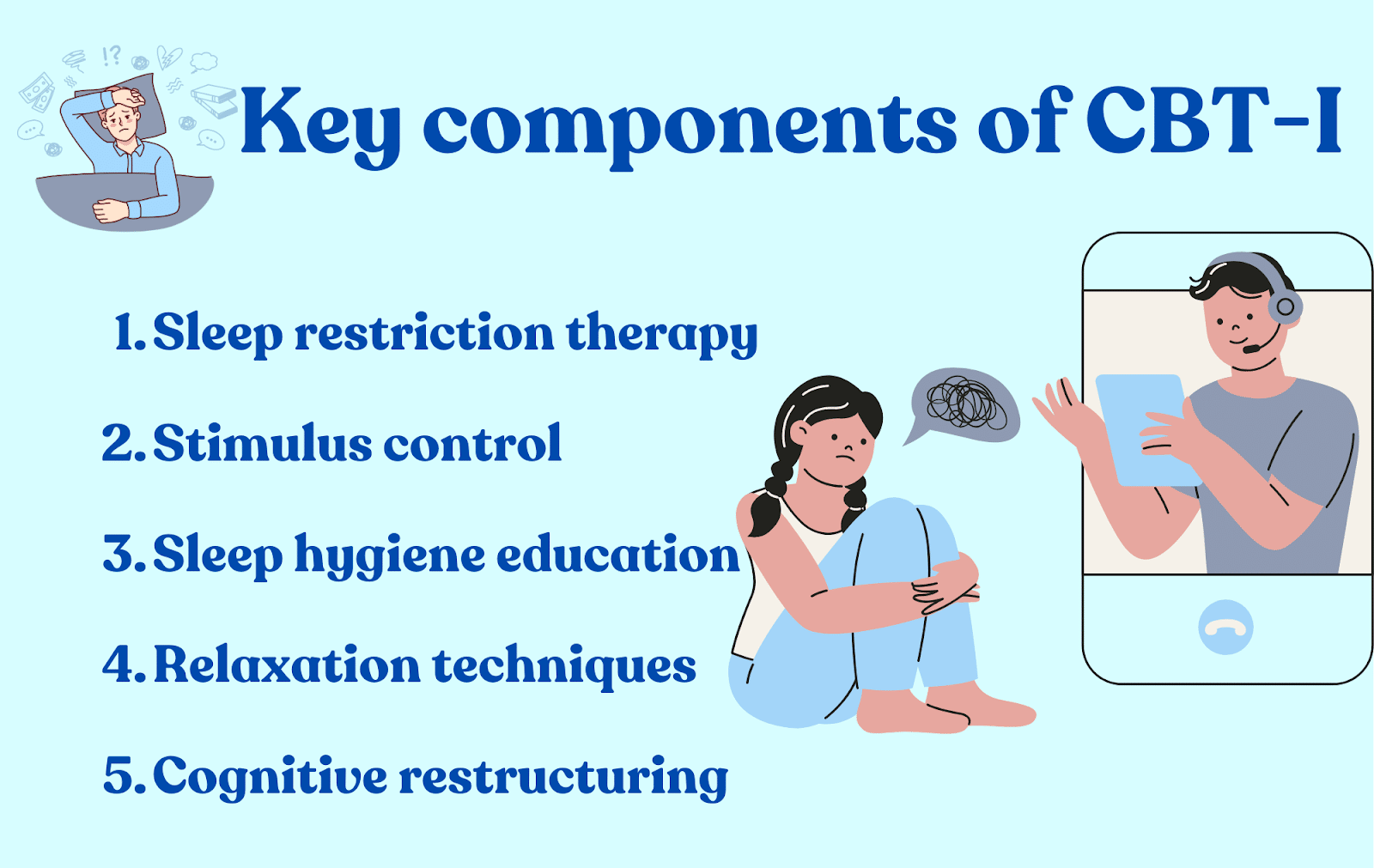
CBT-I (Cognitive Behavioral Therapy for Insomnia) is a guided therapy that is specifically designed to target cognitions and behaviors contributing to insomnia treatment. It accomplishes this by helping the individual to become aware of and challenge the negative sleep-interfering thought patterns, such as anxiety regarding one’s inability to fall asleep or any concern that keeps the mind racing at night.

The Link Between Sleep and Mental Health (3)

Photo Courtesy: addictionresource.com

Lifestyle Changes and Relaxation Techniques

Simple lifestyle modifications can significantly improve sleep quality and reduce anxiety.

  • Reduce caffeine intake: Especially in the afternoon and evening
  • Regular exercise: But not too close to bedtime
  • Limit screen time: Avoid blue light exposure before bed.

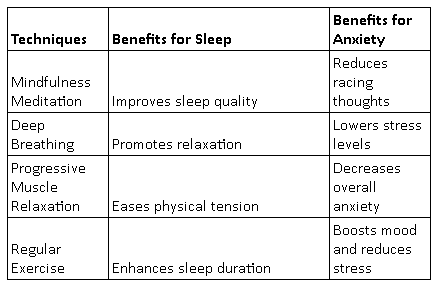
Incorporating relaxation techniques can also be beneficial.

  • Mindfulness meditation: Helps calm racing thoughts.
  • Deep breathing exercises: Reduces physical tension

Progressive muscle relaxation: Promotes overall relaxationThe Link Between Sleep and Mental Health

The Role of Professional Help

While self-help strategies are valuable, it’s important to recognize when professional help is needed. Seek medical advice if you experience:

  • Persistent anxiety that interferes with daily life
  • Severe sleep disturbances lasting more than a few weeks
  • Symptoms of sleep disorders (e.g., loud snoring, gasping for air during sleep)

In some cases, medication may be prescribed to manage anxiety or sleep issues. Always consult with a healthcare professional to discuss the best treatment options for your specific situation.

Conclusion

The connection between sleep and anxiety is clear and profound. By making sleep a priority and addressing anxiety simultaneously, we can disrupt the harmful cycle where one worsens the other. Improving your sleep quality isn’t just about feeling rested; it’s a crucial step toward managing anxiety and enhancing overall mental well-being. 

Embrace the strategies discussed, and remember that a better night’s sleep can pave the way to a calmer, healthier mind.

FAQs

1. How much sleep do I need to reduce anxiety? 

Most adults need 7-9 hours of quality sleep per night. Consistency is key; aim for a regular sleep schedule rather than focusing solely on hours.

2. Can anxiety medications affect my sleep? 

Some anxiety medications can affect sleep patterns. Always discuss potential side effects with your healthcare provider and report any sleep disturbances you experience.

3. Is it better to stay in bed when I can’t sleep or get up? 

If you can’t sleep after 20-30 minutes, it’s generally better to get up and do a calming activity until you feel sleepy. This helps associate your bed with sleep, not wakefulness.


Published by: Khy Talara

Protect and Personalize Your Off-Road Bike: Essential Tips

By: SEO Mavens

For the adrenaline junkies and dirt track enthusiasts, upgrading your off-road bikes is more than just a hobby; it’s a relentless pursuit of performance, protection, and personalisation. If you’re riding through the rugged terrains of Australia on a Husqvarna or Gas Gas, knowing the right upgrades can make all the difference between conquering the outback or being left in the dust. In this ultimate guide, we’ll navigate the essential upgrades that can elevate your off-road biking experience.

Boost Performance with the Right Upgrades

Whether you’re tearing up the trails or navigating through technical tracks, the performance of your off-road bike is paramount. One such upgrade that’s pivotal for Husqvarna riders is optimizing the heart of your machine – the engine. For a Husqvarna 250, consider investing in a high-quality clutch cover that not only enhances your bike’s look but also offers superior protection against the elements and potential impact.

Speaking of performance, never overlook the importance of weight savings and power delivery. Lighter parts can contribute to a swifter, more agile ride, while mods such as high-performance exhausts and air filters can significantly improve air flow and engine efficiency. It’s these subtle tweaks that refine your ride, making each journey more exhilarating than the last.

Protection: Your Bike’s Premier Defense

In the unpredictable world of off-road riding, protecting your bike from the harshness of the Australian landscape is critical. A robust dirt bike case saver is an indispensable add-on for any serious rider. This small but mighty upgrade acts as a shield, preventing chain breakage from causing irreversible engine case damage. It’s the kind of protection that could save you from costly repairs down the line.

Don’t stop there; skid plates, handguards, and radiator guards are also key components in fortifying your bike. They safeguard vital parts against jarring knocks and debris, aiming that your machine remains unscathed, no matter how grueling the path.

Personalize for Comfort and Style

Riding is not just about performance and protection; comfort and style also play a significant role in your overall experience. Custom grips, seats, and foot pegs can offer enhanced comfort for those long rides, while stylistic elements such as decals and anodised components can give your bike a unique personality that stands out from the crowd.

Choosing the Right Upgrades

When considering upgrades for your off-road bike, it’s crucial to weigh the benefits against your specific riding needs and style. Prioritize mods that will offer tangible improvements to your riding experience. For those looking to make a statement and improve their Gas Gas machines, seeking genuine upgrades designed for gas gas in Australia will aim for compatibility and reliability, keeping your ride in peak condition.

Another aspect to ponder is the terrain you’ll be riding on; Australia’s diverse landscapes may require specific tweaks for maximum advantage. Riders frequently traversing sandy coasts might differ in their upgrade paths from those scaling rocky outbacks.

Installation and Support

Choosing the right upgrades is only the first step – proper installation and maintenance are just as important. While some riders may be comfortable with DIY installations, others might prefer professional assistance. Regardless of which camp you fall into, having reliable support for your upgrades ensures that you can get back to the thrill of riding with confidence.

Remember, off-road biking is not just about the bike; it’s about the synergy between rider and machine. The premier upgrades should complement your riding style and enhance your connection with your bike.

The Road Ahead: Your Upgraded Off-Road Adventure Awaits

Upgrading your off-road bike is a journey that goes beyond mere mechanics; it’s about unleashing the full potential of your ride and tailoring it to your adventures across the Australian landscape. Whether it’s a performance-focused husqvarna 250, an indispensable dirt bike case saver, or optimizing your gas gas in Australia, each enhancement plays a role in crafting the ultimate riding experience.

Remember that while upgrading is exciting, it’s also a continuous process. The world of off-road biking never stands still, and neither should you. Stay informed on the latest advancements, trends, and experiences in the biking community, ensuring that your ride always stays at the peak of its game.

To conclude, upgrading and protecting your off-road bikes is about aligning with the spirit of adventure that calls so many to the dirt tracks and backcountry trails. It’s an investment in not just your bike, but in countless memories and experiences that lie ahead. Rev up your ride, and let your upgraded Husqvarna or Gas Gas propel you through the thrill and beauty of Australia’s untamed wilderness.


Published by: Khy Talara

The Spero Clinic’s Approach to Chronic Pain Management

By: Erica D’Arcangelo

Imagine excruciating pain every single day. Imagine the sensation that your limbs are on fire, your bones are being crushed, and the feeling of being stabbed and electrocuted constantly. This isn’t medieval torture—it describes the symptoms of Complex Regional Pain Syndrome (CRPS), a debilitating condition that affects approximately 200,000 Americans, including many teens.

CRPS can develop suddenly, often triggered by minor injuries or seemingly spontaneous events, and can escalate to severe, chronic pain affecting multiple parts of the body. In some cases, it can lead to blackouts, non-epileptic seizures, and even periods of immobility.

For many chronic pain patients, CRPS presents overwhelming challenges, leaving them without hope of a normal life. However, countless individuals have found renewed hope and treatment options through specialized care like those at The Spero Clinic.

What is Chronic Pain?

To understand the difference in approach between Spero’s treatments and conventional medicine, one must first understand what chronic pain is and what it signifies.

Chronic pain differs from acute pain, such as cuts, bruises, and broken bones. Acute pain doesn’t last long and disappears after the body heals from whatever caused the pain. In contrast, chronic pain continues long after someone recovers from an injury or illness. Sometimes, it even happens for no obvious reason.

Over 50 million Americans suffer from chronic pain, and more than 17 million are in severe pain. Information from the National Institutes of Health suggests that chronic pain affects more Americans than diabetes, heart disease, and cancer combined.

Traditional Treatments

According to Spero’s treatment philosophy, pain is the body’s alarm system, indicating that something is wrong. Traditional treatments aim at suppressing those alarm systems. While the need for pain medication is obvious, they may not offer long-term solutions. Moreover, prolonged use of pain medications can potentially be more dangerous than the condition they seek to resolve.

“Not even the bravest patient can typically survive the sky-high pain levels that characterize, for example, CRPS without some kind of intervention or help from the outside,” says Spero’s Founder and CEO, Dr. Katinka van der Merwe. “CRPS taught me that sometimes, pain relief is not a luxury or a choice, but a necessity for simple survival.”

She continues, “That being said, I have been humbled by the bravery I have encountered in many CRPS patients, who will refuse to reach for pain medication unless they are backed against a monstrous wall of pain. Because most CRPS patients have access to vast amounts of pain medications, this truly takes self-control.”

Understanding the Spero Approach

The Spero Clinic integrates chiropractic philosophy as part of a holistic approach, though its efficacy may depend on individual patient conditions. This stems from the belief that the body is a self-healing organism, capable of surviving and healing even catastrophic injuries.

Unlike most treatments, the Spero Clinic does not aim to disrupt or numb the pain signals. Instead, it seeks to uncover abnormalities in the Central Nervous System and restore balance to the body’s nervous system. In other words, the healing occurs from the inside out.

It’s this approach—looking for and treating the causes of the pain—that has earned the Spero Clinic an impressive success rate in treating their patients.

Says Dr. Katinka, “My patients have been to many, many different doctors. They have navigated a maze of hospitals, clinics, and specialists that most people cannot even begin to imagine the sheer volume of. They have been prodded, poked, stabbed, and misdiagnosed many times. The average CRPS patient will go misdiagnosed or undiagnosed for years before they are lucky enough to find out what is wrong with them.”

The Spero Clinic offers a unique treatment program that has helped many patients improve their quality of life.

“I set out on a journey ten years ago that made treating the nervous systems of those suffering from CRPS not only a part of my life as a chiropractic physician but my passion and my mission,” says Dr. Katinka. “I’ve created the clinic that I’ve always dreamt about, and we have been changing lives, one at a time. To us, every patient counts, every person matters.”  

To learn more about The Spero Clinic, Dr. Katinka, and her staff, visit TheSperoClinic.com.


Published by: Khy Talara

Optimal Red Light Therapy Session Length: What to Know

Red light therapy is being explored as a non-invasive option that may offer benefits for certain conditions, such as skin care and pain relief. Despite its growing popularity, many people remain skeptical about its safety, particularly given that noticeable results may take weeks to manifest. Common concerns include the duration of each red light therapy session and ensuring it is used safely. This article will address frequently asked questions regarding how long you should use red light therapy and explore its safety considerations to provide clarity and reassurance.

How long should one be exposed to red light therapy?

The optimal duration for red light therapy depends on several factors, including the device used and the specific condition being treated. Generally, for most red light therapy devices:

  • Session Length: Aim for about 10-20 minutes per session. This duration allows the light to penetrate the skin effectively without overexposing yourself.
  • Frequency: Use the therapy 3-4 times per week, depending on the specific device and intended use. Consistency can support gradual improvements, but results may vary.
  • Device Instructions: Always follow the manufacturer’s guidelines for session length and frequency to avoid potential side effects.
  • Condition Specifics: For targeted treatments, such as for muscle recovery or skin issues, adjust the duration as recommended by a healthcare provider or according to the device’s instructions.

Are there any possible side effects of staying long under red light therapy?

Staying under red light therapy for extended periods can potentially lead to some side effects. These may include:

  • Skin Irritation: Prolonged exposure can cause redness, itching, or a rash, especially if the skin is sensitive.
  • Dryness: Overuse might lead to dryness or flakiness in the treated area.
  • Temporary Discomfort: You may experience a warming sensation or mild discomfort during or after treatment.
  • Eye Strain: Extended exposure to bright light can cause eye strain; wearing protective goggles is advisable.
  • Burns: Excessive or improper use can lead to burns or overheating of the skin.
  • Photosensitivity: Increased sensitivity to sunlight can occur, raising the risk of sunburn

Is there a risk of cancer or brain damage with red light therapy?

Current research does not indicate that red light therapy (RLT) causes cancer or brain damage when used appropriately. Red light therapy involves using low-level wavelengths of light, which do not have the same risks as higher-energy forms of radiation like ultraviolet (UV) light.

Red light therapy (RLT) uses non-ionizing radiation, which is generally considered too low-energy to damage DNA or cause cancerous changes in cells. Current research does not indicate a significant risk of cancer when RLT is used according to recommended guidelines, though long-term effects continue to be studied. Following the device manufacturer’s instructions ensures safe usage and minimizes risks, affirming that RLT is not associated with carcinogenic effects.

Regarding brain damage, red light therapy involves low-energy light that does not penetrate deeply enough to impact brain tissues. The therapy is designed primarily for surface-level tissues such as skin. Current research does not indicate any risk of brain damage from RLT, as studies typically focus on its effects on skin and surface-level tissues rather than deeper brain regions.

This article was first published on 369 Wellness Center. For more information on red light therapy, visit the website. 

Published by: Holy Minoza