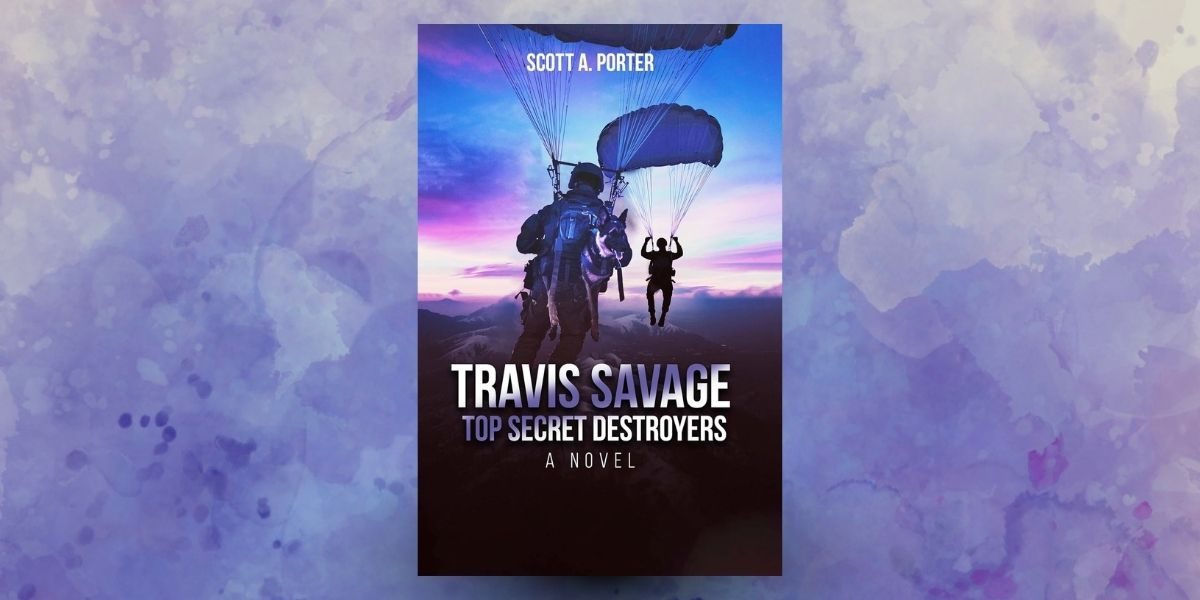


There is a distinct difference between studying war and surviving it. You can read every memoir, watch every documentary, and memorize every tactical manual ever written. But until you have felt the concussive force of an incoming round travel through your chest, until you have carried a wounded friend through mud while taking fire, until you have given orders knowing some of your men might not come back, you cannot truly understand what war demands. Lieutenant Colonel Scott A. Porter, a 100% disabled combat veteran, understands this. His novel Travis Savage proves it on every page.
The Weight of Authenticity
Most war novels get small things wrong. The way a soldier moves through darkness, for example. In Travis Savage, Porter describes his characters crawling through moonlit terrain, pausing to listen, moving again in short rushes. It reads like an instruction because it is. Porter commanded airborne and tank units across multiple conflicts. He knows that night movement isn’t dramatic. It is slow, exhausting, and requires constant communication between men who trust each other with their lives.
When Travis and his KLA allies infiltrate enemy territory, they don’t move like movie commandos. They stop constantly. They check their bearings. They listen for sounds that don’t belong. Porter understands that patience keeps soldiers alive, not heroics.
Sound and Sensation
The sound of incoming fire is another detail that research cannot capture. Porter describes it as something felt before it is heard. A vibration. A shift in the air. Then the crack. In Travis Savage, characters don’t just hear explosions, they feel them in their teeth, in their stomachs, in the sudden ringing that follows.
When napalm strikes in the novel’s climactic battle, Porter doesn’t just describe the flames. He describes the way oxygen disappears from the air. The way men scream but cannot hear themselves. The way survivors vomit from the smell of burning flesh. These are not details pulled from after-action reports. They are details pulled from memory, filtered through decades of processing what war actually does to human beings.
The Physical Toll
Combat veterans understand something civilians rarely consider: the sheer physical exhaustion of fighting. Porter’s characters don’t just run and gun. They collapse. They vomit from dehydration. Their hands shake so badly that they cannot hold canteens. Their legs give out after hours of climbing through rocky terrain, carrying packs that feel like they weigh two hundred pounds.
In one scene, Travis struggles to raise his rifle after crawling through mud for hours. His arms have gone rubbery. His fingers are numb. He is on the verge of muscle failure. Porter writes this moment not as weakness but as reality. War is not a video game where stamina bars refill. War is pushing a body past its limits again and again until something breaks.
The Bond Between Handler and Dog
Few writers capture the relationship between a soldier and his military working dog with the authenticity Porter brings to Travis and Trooper. Trooper is not just a tool or a pet. He is a partner who understands his handler’s moods, who provides comfort without words, who risks his life because that is what the team does.
When Trooper whines, Travis pays attention. When Travis is upset, Trooper leans against him. Porter shows this bond through small moments, not grand speeches. A hand scratching behind the ears. A dog resting his head on a knee. The way they move together through dangerous terrain without needing to communicate. Anyone who has served with a military dog will recognize the truth in these scenes.
The Moral Complexity
Veterans also understand something that armchair writers often miss: war is morally complicated. Porter does not write simple heroes and villains. His Serb characters include men who are horrified by the atrocities committed in their name. His KLA characters include men who execute prisoners in cold blood. His NATO officers make mistakes that cost civilian lives.
This complexity comes from experience. Porter has seen what war does to good people. He has watched men make impossible choices. He knows that courage and cowardice often exist in the same person, sometimes in the same moment. Travis Savage reflects this understanding. No character is purely good or purely evil. They are all just people trying to survive situations that should not exist.
The Fog of War
Perhaps the most authentic element of Porter’s writing is how he handles chaos. In combat, information is always incomplete. Radios crackle with conflicting reports. Units get lost. Officers make decisions based on guesses. Porter captures this perfectly.
Throughout Travis Savage, characters operate on partial information. They guess where the enemy will be. They hope air support arrives on time. They pray their maps are accurate. Sometimes they are right. Sometimes they are wrong, and people die. Porter does not tidy this up for narrative convenience. He lets the chaos stand because that is how war actually works.
The Educator Who Writes
Before Porter wrote fiction, he taught tactics and leadership at the US Army’s Command and General Staff College. In 2013, he was named the Army’s civilian educator of the year. He has won eleven writing awards for nonfiction peer-reviewed publications. He has spoken at over twenty universities and historical groups. He served as a trustee on the National World War One Memorial board.
This background matters because it explains why his fiction works. Porter is not just a veteran who decided to write a novel. He is a career soldier who spent years studying military history, teaching officers how to think about war, and then applying that knowledge to fiction. Every tactical decision in the book makes sense. Every leadership moment reflects real doctrine filtered through real experience.
Why Authenticity Cannot Be Faked
There are many excellent war novels written by authors who never served. Research can take a writer far. But research cannot replicate the feel of a rifle in cold hands after hours of waiting. Research cannot describe the specific weight of exhaustion that comes from carrying a wounded comrade. Research cannot capture the way soldiers talk to each other when they think no one else is listening.
Porter brings all of this to his novel. He writes from within the experience, not about it. His characters think like soldiers, move like soldiers, and fail like soldiers. When they are afraid, it is the specific fear of someone who has been in combat before and knows exactly what can happen. When they are brave, it is the reluctant bravery of professionals doing a job they wish they didn’t have.
Earning the Right to Tell These Stories
Scott A. Porter represents something rare in military fiction: an author who has earned the right to tell these stories. His combat service, his teaching career, his academic credentials, and his awards all point to someone who understands war at every level. Travis Savage reflects that understanding on every page. For readers who want to know what war actually looks like, not what Hollywood imagines, this novel offers a perspective grounded in lived experience.
Published by Oxford Book Writers, the novel reflects the firsthand perspective that only comes from someone who has served. Porter’s experience as a Ranger, commander, and educator brings a level of realism that research alone cannot achieve.